搜索结果:South (共 33 条结果)
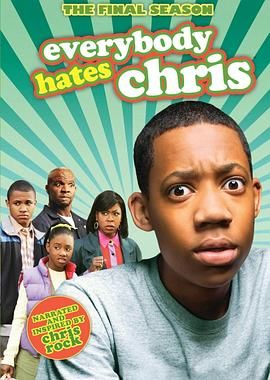
人人都恨克里斯 第四季
导演:
语言:英语
主演: 泰勒·詹姆斯·威廉姆克里斯·洛克泰瑞·克鲁斯蒂琪娜·阿诺特昆·里奇蒙德伊马尼·哈基姆文森特·马特拉
简介:<p><span style="color: rgb(51, 51, 51); font-family: Arial, Helvetica, sans-serif; font-size: 13px; white-space: pre-wrap; background-color: rgb(255, 255, 255);">喜剧明星Chri<span style="color: rgb(51, 51, 51); font-family: Arial, Helvetica, sans-serif; white-space: pre-wrap; background-color: rgb(255, 255, 255); font-size: 16px;">s Rock是三兄弟里的长男,在80年代的纽约市布鲁克林区长大。儿时的经历使他得到灵感,在人人都恨克里斯里,叙述了有趣而感人的关于青少年成长的故事。 Chris (Tyler James Williams) 背井离乡来到新的小区,严厉而勤劳的父母租了一辆车,把他送去主要是白人的中学。离原来的住地有两个小时车程。他在努力寻找自己的定位,让自己保持与在家的兄弟们接轨同时,还烦恼考高中的事情。UPN电视台的新情景喜剧人人都恨克里斯讲述的就是这个不屈不挠的年轻人带来的一个独特的有趣的关于他的每天的磨难的故事。1982年Chris 13岁了。他带着青少年都很酷的幻想,却发现自己的青少年生活不那么简单美妙。从家乡搬到暴戾的Bedford-Stuyvesant社区,Chris还没脱离大哥哥的角色。父母在工作的时候,他就是家里的临时家长,负责照顾Drew (Tequan Richmond),比他更高更像哥哥的弟弟,和最小的妹妹Tonya (Imani Hakim)。坚韧节约的爸爸Julius (Terry Crews)为养家糊口做了几份工作。与此同时严厉的精力旺盛的勤俭持家的妈妈Rochelle (Tichina Arnold)在小房地产公司兼职。她要求孩子们什么都做到最好。Chris的妈妈决定让他到一个好的学校去。因此他每天要搭很长时间的车到South Shore社区的Corleone Junior High。虽然一下就成了欺负对象,Chris与生具有的魅力和过人的机智让他交到了一些新朋友:比方说Greg (Vincent Martel),聪明的不会打架的好孩子。当Chris Rock的尖锐性格反害到自己时,他体会到他的家人早就知道的东西:他需要改变的尖锐的天性。但首先,他必须思考,说话或者抓紧一个又一个的成长经历</span></span></p>...

一级方程式:疾速争胜 第一季
导演: MartinWebbNickHardieJamesRouthNonukWalter
语言:英语
主演: 费尔南多·阿隆索基米·莱科宁罗曼·格罗斯让夏尔·勒克莱尔DanielRicciardo
简介:<p><span style="color: rgb(17, 17, 17); font-family: Helvetica, Arial, sans-serif; font-size: 13px; text-wrap-mode: wrap; background-color: rgb(255, 255, 255);">每一个竞争激烈的赛季,不论赛道内外,一级方程式赛车选手、领队主管还有车队老板都过着赛车般分秒必争的快节奏生活。 剧集不光展现瞬息万变的赛道竞速,记录可能发生的车祸和意外——「比赛就像是一次次心脏病发作」——也将跟随车手了解他们在大赛前后的艰苦训练,讲述他们与家人和车队之间的故事。</span></p>...

镜子的另一面:纽波特民歌艺术节1963~1965
语言:英语
主演: BobDylanJoanBaezJudyCollins
简介:"Bob Dylan going electric" at the 1965 Newport Folk Festival is one of those epochal moments in rock history that seemingly everyone has heard about, but what few people seem to know is that it wasn't some ephemeral event that we only know from word of mouth -- filmmaker Murray Lerner documented the performances at the Newport Festival for several years running, and The Other Side of the Mirror collects footage from the three years Dylan appeared at the celebrated folk gathering, allowing us to see Dylan's rise through the folk scene for ourselves. Watching Lerner's documentary, what's most remarkable is how much Dylan changed over the course of 36 months; the young folkie performing at the afternoon "workshop" at the side of Joan Baez in 1963 is at once nervy and hesitant, singing his wordy tunes while chopping away at his acoustic guitar and energizing the crowd without seeming to know just what he's doing. In 1964, Dylan all but owns Newport, and he clearly knows it; he's the talk of the Festival, with Baez and Johnny Cash singing his praises (and his songs), and his command of the stage is visibly stronger and more confident while his new material (including "Mr. Tambourine Man" and "It Ain't Me, Babe") sees him moving away from the "protest songs" that first made his name. When the audience demands an encore after Dylan's evening set (Odetta and Dave Van Ronk were scheduled to follow him), Peter Yarrow tries to keep the show moving along while Dylan beams at the crowd's adulation, like the rock star he was quickly becoming. By the time the 1965 Newport Festival rolled around, Dylan's epochal "Like a Rolling Stone" was starting to scale the singles charts, and the hardcore folk audience was clearly of two minds about his popular (and populist) success. When Dylan, Fender Stratocaster in hand, performs "Maggie's Farm" backed by Al Kooper, Mike Bloomfield and the rhythm section from the Paul Butterfield Blues Band, the raucous but hard-driving number inspires a curious mixture of enthusiastic cheering and equally emphatic booing, and while legend has it that the version of "Like a Rolling Stone" that followed was a shambles, the song cooks despite drummer Sam Lay's difficulty in finding the groove, though if anything the division of the crowd's loyalties is even stronger afterward. After these two numbers, Dylan and his band leave the stage, with Yarrow (once again serving as MC) citing technical problems (if Pete Seeger really pulled the power on Dylan, as legend has it, there's no sign of it here); Dylan returns to the stage with an acoustic six-string to sing "Mr. Tambourine Man" and "It's All Over Now, Baby Blue" before vanishing into the night without comment. While much of the audience at Newport in 1965 wanted the "old" Dylan back, his strong, willful performances even on the acoustic stuff makes it obvious that the scrappy semi-amateur we saw at the beginning of the movie was gone forever, and the ovations suggest more than a few people wanted to see Dylan rock. Lerner's film tells us a certain amount of what we already knows, but it gently debunks a few myths about Dylan during this pivotal moment in his career, and his performances are committed and forceful throughout; no matter how many times you've read about Dylan's Newport shoot-out of 1965, seeing it is a revelatory experience, and Lerner has assembled this archival material with intelligence and taste. This is must-see viewing for anyone interested in Dylan or the folk scene of the '60s....